Orange County’s New War on Illegal E-Motos: DA’s Response to Fatal Crashes Involving Teens
Orange County is ramping up efforts to keep dangerous e-motos out of teens' hands and to hold parents accountable.
Orange County, CA, is escalating its crackdown on illegal electric motorcycles, commonly referred to as e-motos, following a series of deadly crashes involving minors, rising injury rates, and growing concerns about high-powered electric vehicles being marketed as e-bikes.
What began as traffic enforcement has rapidly evolved into criminal prosecution.
In May 2026, Orange County District Attorney Todd Spitzer announced the creation of a specialized prosecution unit called RIDE SAFELY, Smart Accountability for E-Bikes and E-Motos and Law Enforcement for Youth, to review cases involving illegal e-motorcycle use, underage riders, and potentially criminal conduct by parents.
The announcement comes amid mounting pressure across California to distinguish legal electric bicycles from high-powered electric motorcycles that exceed state e-bike limits for speed and power. Prosecutors, law enforcement agencies, and state officials are increasingly warning that many vehicles marketed and sold as “e-bikes” are, under California law, motorcycles or mopeds.
Why Orange County is Escalating Enforcement Against E-Motos
Orange County officials say the issue has reached a crisis point.
According to the Orange County District Attorney’s Office, injuries involving e-bikes and e-motorcycles have increased 430% in Southern California over the last four years, with the majority involving children not legally allowed to operate the vehicles.
The focus is not on legal pedal-assist e-bikes used for transportation or recreation. Instead, officials are targeting high-powered electric motorcycles, many capable of speeds exceeding 50 mph, that are being operated by minors on public roads without licenses, registration, insurance, or formal training.
Orange County District Attorney Todd Spitzer has described the growing presence of illegal e-motos among children and teenagers as a public safety emergency.
Concerns over illegal electric motorcycles at schools were reinforced by a December 2025 Mineta Transportation Institute (MTI) report, commissioned under California Senate Bill 381, which found that only 12% of electric two-wheeled devices observed at many California schools were actually legal e-bikes.
The crackdown follows several high-profile crashes involving minors operating electric motorcycles, including multiple fatalities in Orange County during the spring of 2026.
The Cases That Changed the Conversation
Lake Forest Crash Kills 81-Year-Old Vietnam Veteran
One of the most significant cases driving the crackdown involves 51-year-old Aliso Viejo resident Tommi Jo Mejer.
Prosecutors allege Mejer’s 14-year-old son was riding a Surron Ultra Bee electric motorcycle near El Toro High School in Lake Forest on April 16, 2026, when he struck and critically injured 81-year-old Ed Ashman, a Marine Corps veteran who flew combat missions during the Vietnam War.
Authorities allege the teenager was performing wheelies before the collision.
Ashman died two weeks later from his injuries.
According to prosecutors, the Surron involved in the crash was capable of reaching approximately 58 mph and was significantly more powerful than a legal California e-bike. That e-motorcycle required registration, licensing, and insurance that neither the rider nor the vehicle possessed.
The Orange County District Attorney’s Office charged Mejer with involuntary manslaughter, child endangerment, and being an accessory after the fact. Prosecutors allege she had previously been warned that the vehicle was illegal for her son to operate.
If convicted on all charges, she faces up to seven years and eight months in state prison.
The case marks one of the most aggressive attempts yet in California to hold a parent criminally responsible for allowing a child to operate an illegal electric motorcycle.
Teen Killed Riding an Illegal Electric Motorcycle in Garden Grove
Just weeks later, another fatal crash intensified public scrutiny.
On May 6, 2026, a 13-year-old boy from Santa Ana died after crashing an electric motorcycle near Magnolia Street and Larson Avenue in Garden Grove.
Investigators say the teenager lost control of the vehicle while traveling approximately 35 mph before striking a median and being ejected.
Authorities emphasized that the vehicle involved was not a legal e-bike, but an electric motorcycle designed for off-highway use and illegal to operate on public streets under California law.
The crash further fueled concerns about underage riders operating high-powered electric motorcycles in neighborhoods, near schools, and on public roads throughout Southern California.
E-Bike or E-Moto? What’s the Difference?
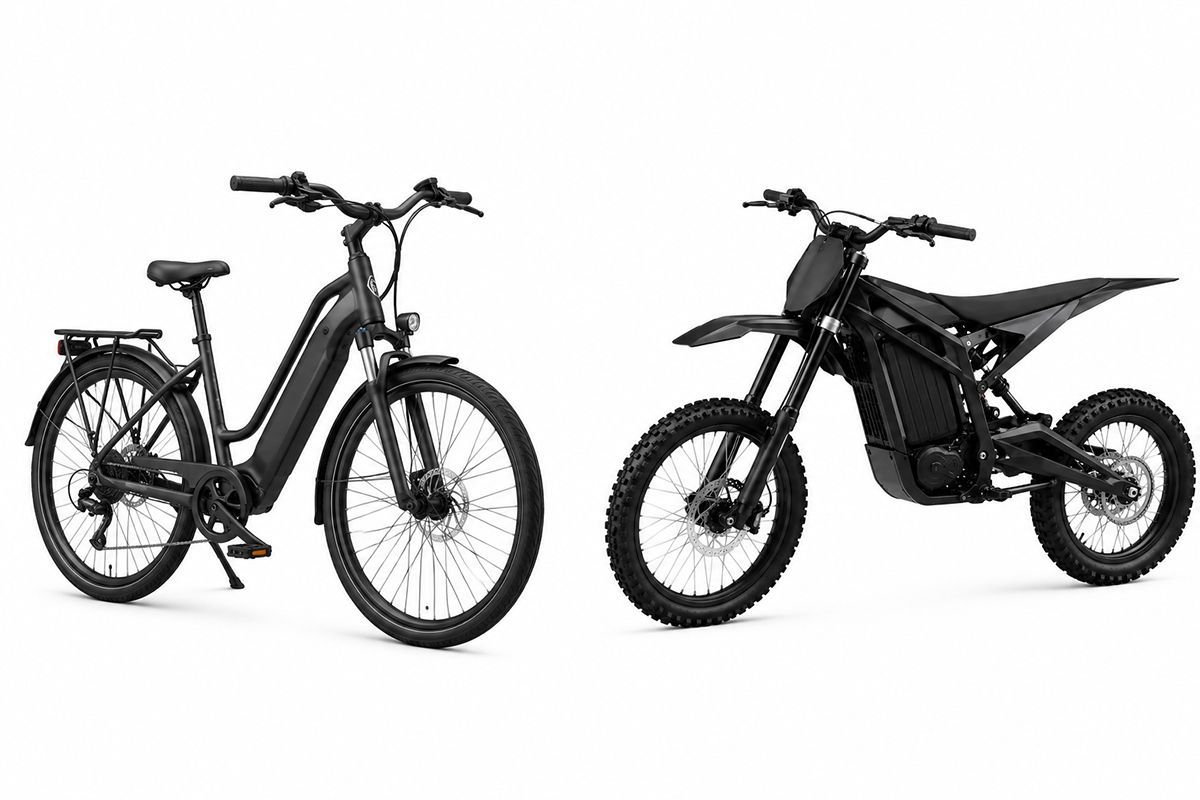
One of the biggest sources of confusion is that many consumers, and even some retailers, use the term “e-bike” broadly to describe nearly any electric two-wheeled vehicle. California law does not.
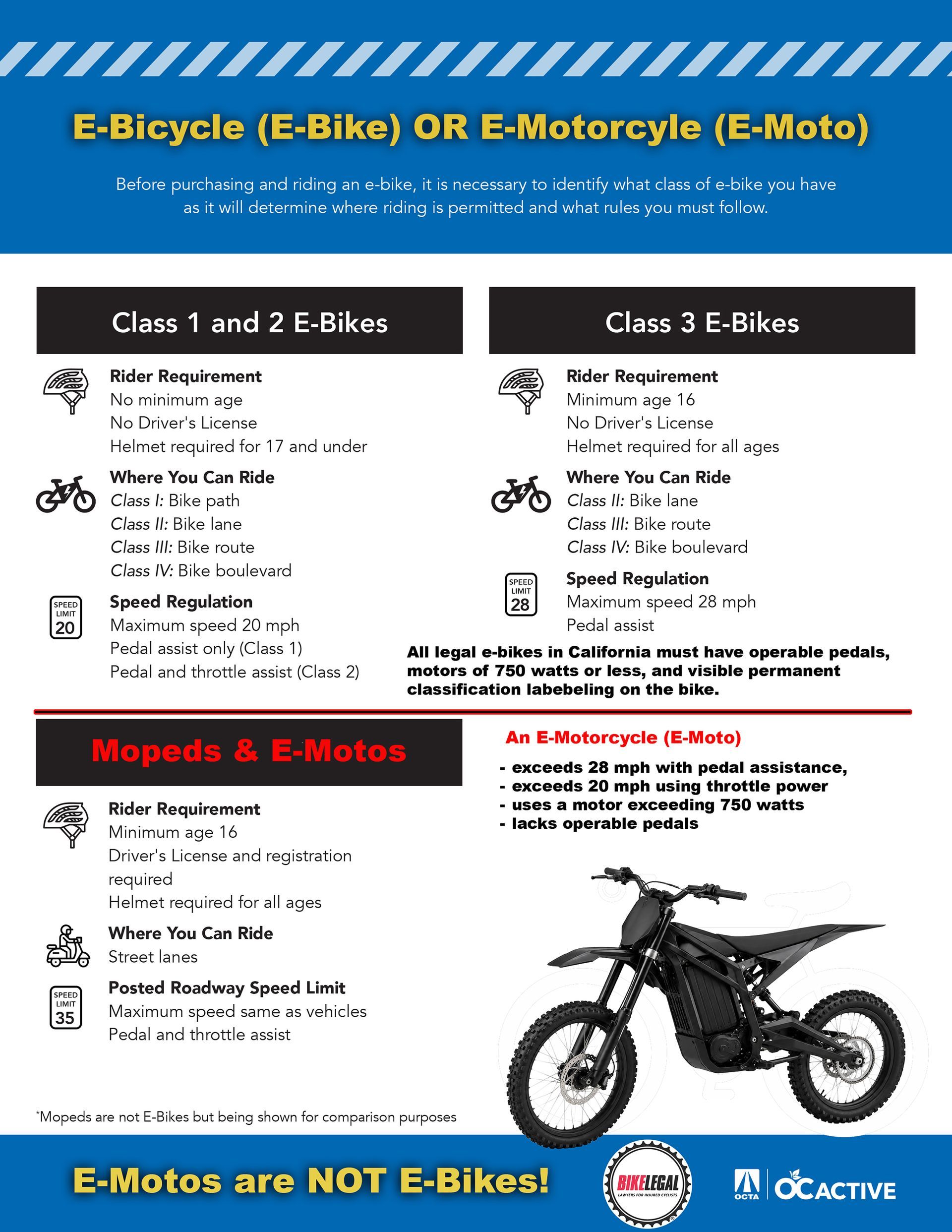
Under California law, legal electric bicycles fall into three classifications:
Class 1 E-Bikes
Class 1 e-bikes provide pedal assistance only and stop providing motor assistance at 20 mph.
Class 2 E-Bikes
Class 2 e-bikes include a throttle and can provide motor assistance up to 20 mph without pedaling.
Class 3 E-Bikes
Class 3 e-bikes provide pedal-assisted speeds up to 28 mph and may only be operated by riders 16 years of age or older while wearing helmets.
All legal e-bikes in California must:
- Have operable pedals
- Use motors no greater than 750 watts
- Include permanent classification labeling
- Remain within state speed limitations
Vehicles exceeding those thresholds may legally qualify as mopeds or motorcycles instead of bicycles.
When an E-Bike Becomes an Electric Motorcycle
According to California Attorney General Rob Bonta, if a two-wheeled electric vehicle:
- exceeds 28 mph with pedal assistance,
- exceeds 20 mph using throttle power alone,
- uses a motor exceeding 750 watts,
- or lacks operable pedals,
It may be legally considered a motorcycle or a moped under California law.
That distinction is becoming central to California’s growing crackdown.
Many high-powered electric motorcycles marketed as e-bikes can achieve motorcycle-level speeds and acceleration. Some are also modified after purchase to bypass factory speed restrictions.
California officials now warn that modifying an e-bike to exceed legal speed or power limits may not only make the vehicle illegal, but could also expose riders and parents to criminal liability.
The Rise of Criminal Liability for Parents
The Orange County District Attorney’s Office is making one thing clear:
Parents may now face criminal consequences for knowingly allowing minors to operate illegal e-motos.
In announcing the new RIDE SAFELY prosecution unit, Todd Spitzer stated:
“If parents refuse to hold their children accountable, then I am going to hold parents accountable.”
Orange County prosecutors have already filed child endangerment charges against multiple parents tied to illegal e-moto incidents involving minors. Previous warnings to parents about illegal e-motos may now become critical evidence in future criminal cases.
The message from prosecutors is that these vehicles are no longer being treated as toys or harmless bicycles. In many cases, officials argue that they are unregistered motorcycles capable of causing catastrophic injuries or death when operated by untrained children.
California’s Crackdown Is Expanding Beyond Riders and Parents
Enforcement is no longer focused solely on riders and their parents. State officials are increasingly scrutinizing:
- manufacturers,
- online marketplaces,
- retailers,
- modifications,
- and deceptive advertising practices.
In April 2026, California Attorney General Rob Bonta issued a statewide consumer alert warning parents and consumers that many vehicles sold as “e-bikes” may actually qualify as motorcycles under California law.
The alert specifically warned retailers not to advertise illegal vehicles as e-bikes and cautioned against selling products intended for unlawful modification.
Shortly afterward, Amazon announced it would stop selling certain high-speed electric bikes in California if they failed to comply with state requirements.
The Problem Is Not Legal E-Bikes
As enforcement intensifies, many cycling advocates worry that legal electric bicycles could become unfairly grouped together with illegal high-powered e-motos.
Legal Class 1, 2, and 3 e-bikes have become important transportation tools throughout California. They help commuters reduce car trips, expand mobility for older riders and individuals with physical limitations, and provide accessible alternatives to driving.
The growing crackdown in Orange County is primarily focused on high-powered electric motorcycles being operated illegally on public roads, often by underage riders.
California officials are seeking to distinguish legitimate electric bicycles from electric motorcycles that exceed legal speed and power limits while still being marketed as e-bikes.
As Attorney General Rob Bonta warned in the state’s 2026 consumer alert:
“If it’s too fast, it’s not an e-bike.”
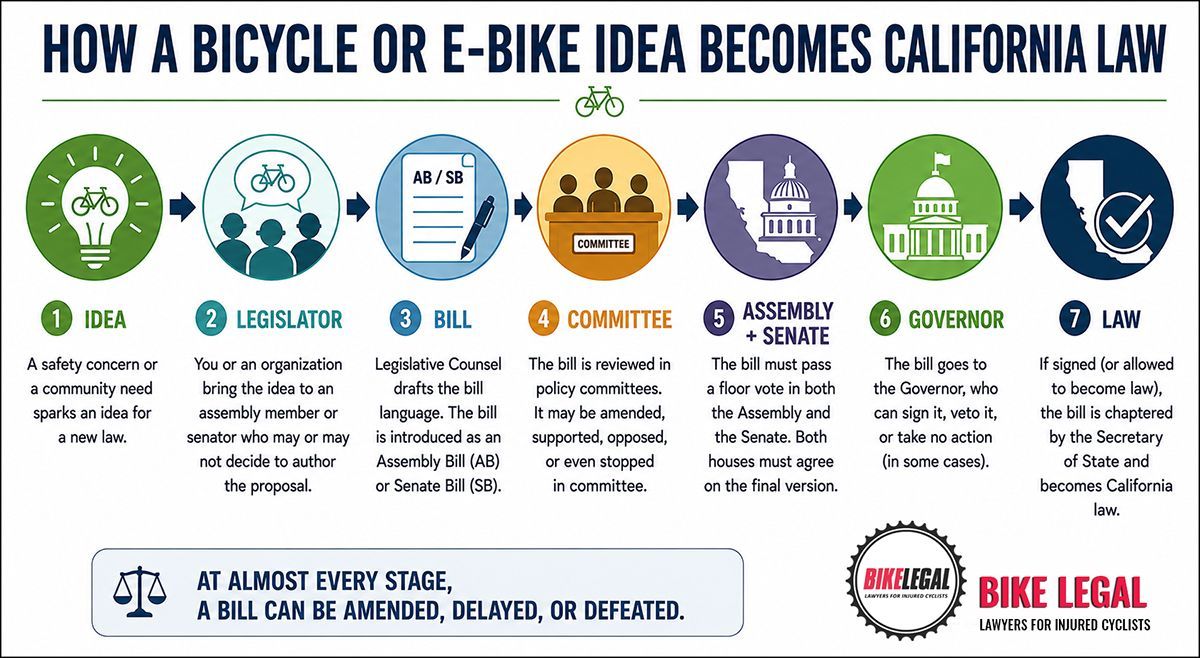
Sacramento Joins the Crackdown with New Legislation
Orange County’s crackdown is part of a larger statewide effort to separate legal e-bikes from high-powered electric motorcycles being marketed as “e-bikes.”
Senate Bill 1167 (SB 1167), introduced by Senator Catherine Blakespear, would expand California’s ability to regulate illegal e-motos, deceptive advertising, and modified electric vehicles that exceed California’s e-bike limits.
Notably, the bill is co-sponsored by CalBike, signaling that even major bicycle advocacy groups support stronger enforcement against illegal high-powered electric motorcycles while continuing to support legal e-bike use.
In the bill’s findings, lawmakers state that:
“Other electric cycles, including motor-driven cycles, mopeds, and ‘e-motos’ are not legal electric bicycles because of their excessive speed and power, are designed and marketed as ‘e-bikes’ to children on social media...”
The bill would prohibit the advertising or sale of motorcycles, mopeds, and off-highway electric motorcycles as e-bikes, and would treat deceptive marketing as a potential violation of California's false advertising law.
What Parents Need to Know Before Buying an E-Bike or E-Moto
Before purchasing any electric two-wheeled vehicle for a child or teenager, parents should:
- Verify the vehicle’s classification
- Confirm it complies with California e-bike laws
- Check for operable pedals
- Review motor wattage and speed limits
- Understand age restrictions for Class 3 e-bikes
- Avoid modifying factory speed restrictions
- Understand licensing and registration requirements for motorcycles or mopeds
Many parents may not realize that some vehicles marketed online as “e-bikes” are actually motorcycles under California law.
As Orange County’s recent prosecutions demonstrate, the legal consequences may extend far beyond traffic citations.
For questions about whether an electric bicycle or e-moto is legal to operate in Orange County, individuals should review California e-bike laws and contact local resources such as OC Bike, OC Active Transportation, or the Orange County Sheriff's Department for additional guidance.
Bike Legal Supports Safer Streets for Everyone
At Bike Legal, we support stronger enforcement against illegal e-motos and legislation to protect the public from dangerous, unlawfully operated high-powered electric motorcycles.
While we are a bicycle accident law firm dedicated to protecting the rights of injured cyclists, we also strongly advocate for bicycle and e-bike safety, responsible riding, and following the laws governing bicycles, e-bikes, and e-motos.
If you have questions about a crash or laws pertaining to bicycles and e-bikes, give us a call or send us a message. We are here to help 24/7 at no cost to you.
📞 Call 877-BIKE-LEGAL (877-245-3534) for a free consultation.
Frequently Asked Questions (FAQ)
Are e-motos legal in California?
Some electric motorcycles, commonly called e-motos, may be legal in California if they meet motorcycle or moped requirements, including registration, licensing, insurance, and required street-legal equipment such as lights, mirrors, a horn, and license plates. However, many high-powered electric motorcycles being ridden by minors on public streets are illegal under California law.
What is the difference between an e-bike and an e-moto in California?
A legal California e-bike must have operable pedals, a motor no greater than 750 watts, and comply with speed limits of 20 mph throttle assistance or 28 mph pedal assistance for Class 3 e-bikes. E-motos often exceed those limits and may legally qualify as motorcycles or mopeds instead of bicycles.
Can parents be held criminally liable if their child rides an illegal e-moto?
Yes. Orange County prosecutors have already filed criminal charges against parents accused of knowingly allowing minors to operate illegal e-motos. Depending on the circumstances, charges may include child endangerment, involuntary manslaughter, or other criminal offenses.
Why is Orange County cracking down on illegal e-motos?
Orange County officials cite rising injuries, fatalities involving minors, reckless riding behavior, and concerns about high-powered electric motorcycles being marketed as e-bikes to children. Prosecutors and lawmakers argue that many of these vehicles are unsafe for underage riders and illegal to operate on public streets.
Are Surrons legal e-bikes in California?
Many Surron models exceed California’s legal e-bike limits for speed and power and may legally qualify as electric motorcycles rather than e-bikes. Some models are designed primarily for off-road use and are not legal to operate on public streets unless they are properly registered, insured, equipped with required street-legal equipment, and operated by a licensed rider.
What happens if an e-bike exceeds California’s legal limits?
If an electric bicycle exceeds California’s legal limits for speed, motor wattage, or lacks operable pedals, it may legally be classified as a motorcycle or moped. That can trigger additional legal requirements, including registration, licensing, insurance, and helmet laws.
Why are officials warning about illegal e-motos at schools?
A 2025 Mineta Transportation Institute report found that only 12% of electric two-wheeled devices observed at some California schools were legal e-bikes. Officials say many students are riding high-powered electric motorcycles that exceed California’s e-bike laws.
Why are many e-motos disguised as e-bikes?
Many high-powered electric motorcycles, commonly called e-motos, are marketed as “e-bikes” because the term sounds less regulated and appeals to a wider audience, including teenagers and parents. California officials argue that some manufacturers and retailers use e-bike branding to increase sales even when the vehicles exceed California’s legal e-bike limits for speed and power.
Can an e-bike be modified to go faster in California?
Modifying an e-bike to exceed California’s speed or power limits may make the vehicle illegal and could expose riders or parents to legal consequences. California officials are increasingly targeting unlawful modifications and deceptive marketing practices.
What should parents know before buying an e-bike for their child?
Parents should verify whether the vehicle is a legal Class 1, 2, or 3 e-bike under California law. They should review speed limits, motor wattage, pedal requirements, age restrictions, and whether the vehicle requires registration or licensing. If parents are unsure whether a vehicle is legally classified as an e-bike, moped, or motorcycle, they should contact local law enforcement or the California DMV or review California’s e-bike laws before purchasing.
Bike Legal Spoke & Law Blog

Ride Protected
Ride Safe, with Bike Legal
At Bike Legal, our mission is to advocate for bicycle safety and to share the road responsibly through education. Our legal team is committed to supporting and representing cyclists across the United States, no matter where you ride or how you ride.